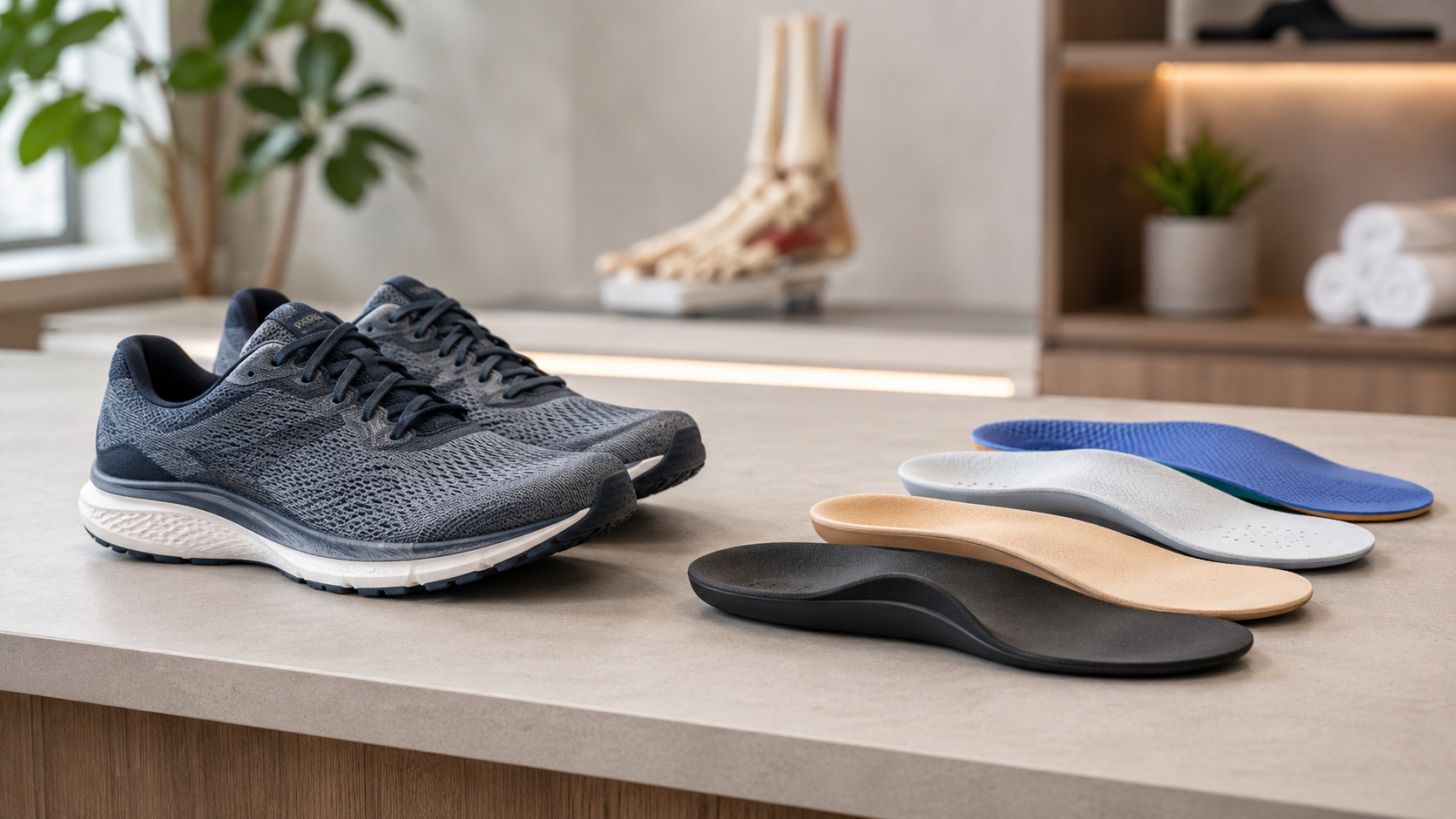
At some point in the foot pain journey, almost everyone faces the same fork in the road. Someone, a podiatrist, a physical therapist, a well-meaning friend, tells you that you need orthotics. You look up the price. Four hundred dollars. Six hundred. Sometimes more, depending on where you live and what your insurance covers. Then you find an article that says a good supportive shoe is enough. Then another that says orthotics are essential. Then one more that says custom orthotics are no better than the $40 insole from the drugstore.
None of those things are completely wrong. That is the problem. The answer genuinely depends on your specific condition, how severe it is, and what you have already tried. This article lays out the honest framework for making that decision, without a financial stake in either direction.
Three things that get called orthotics and why the distinction matters
Before deciding whether you need orthotics, it helps to understand that the word covers three very different things, each with a different cost, a different mechanism, and a different clinical role.
Custom orthotics are prescription medical devices. They are made from a cast or 3D scan of your specific foot by a podiatrist or orthopedic specialist. They are designed to address a diagnosed structural or biomechanical problem in your particular foot and not a generalized foot type. They cost $400 to $600 or more, are not always fully covered by insurance, and require a clinical evaluation to prescribe. They are the most targeted intervention in this category and the most expensive one.
Prefabricated orthotics - OTC insoles. Are mass-produced devices designed around common foot shapes and arch profiles. Brands like Superfeet, Powerstep, and Spenco fall here. They cost $15 to $80, require no prescription, and are available at most pharmacies and shoe stores. They are not custom to your foot, but they provide meaningful arch support, cushioning, and in some cases biomechanical correction for a large percentage of people.
Supportive footwear is not an orthotic at all, but it performs some of the same functions. A stability shoe with a medial post addresses overpronation directly through the midsole. A shoe with a firm arch structure and elevated heel reduces plantar fascia tension. A wide toe box reduces forefoot pressure. The support is built into the shoe rather than inserted into it. For many conditions, this is where the intervention should start.
The clinical distinction matters because each option is solving a different version of the problem. Conflating them leads to either overspending on a custom device you did not need, or underspending on an OTC insole when your condition required a custom solution.
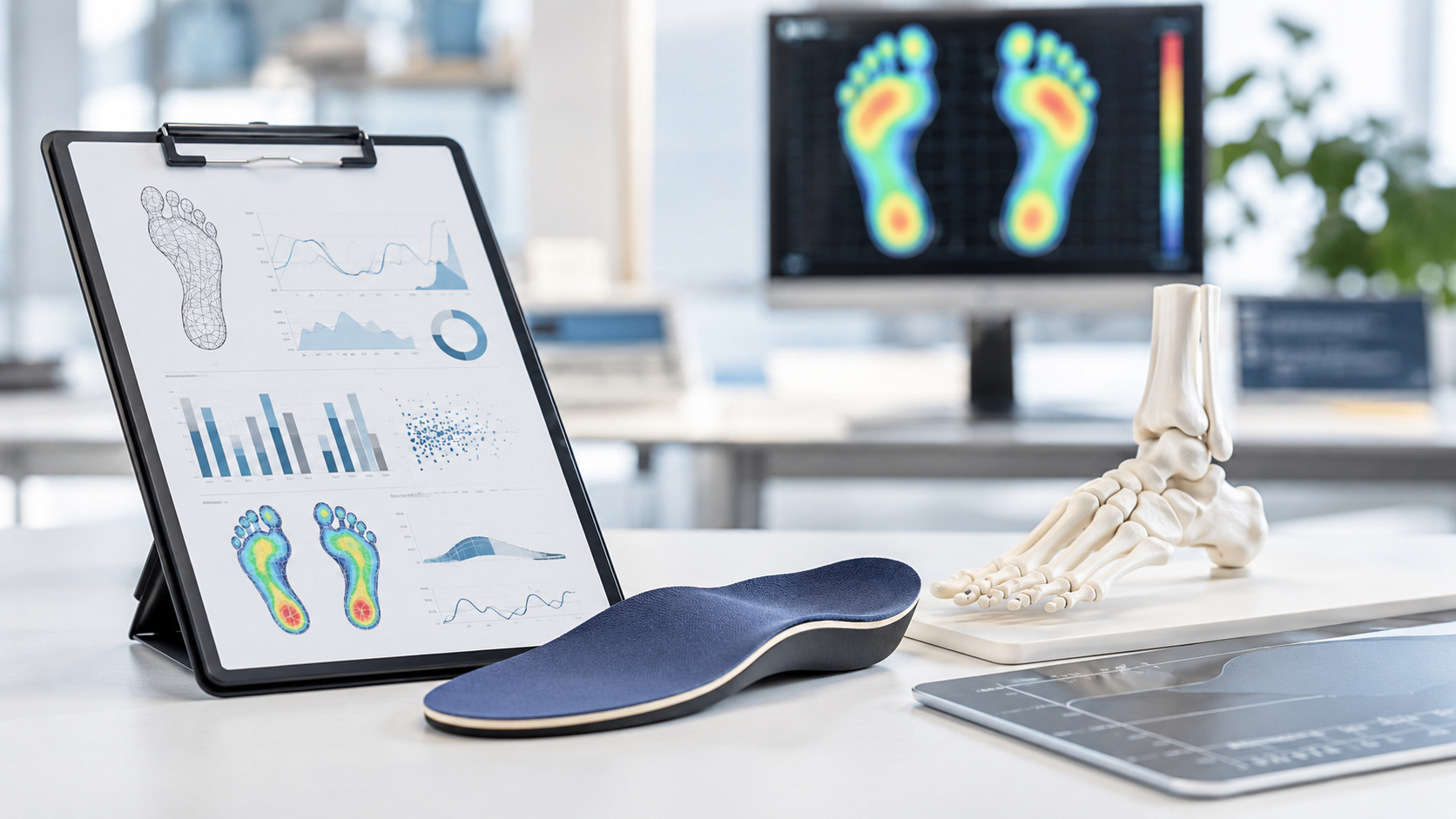
Three different interventions. Three different price points. Not always three different outcomes.
Understanding what each option actually does and what clinical problem it is designed to solve, is the first step toward making the right decision for your specific condition.
What the evidence actually says
The most comprehensive evidence review on this specific question comes from CADTH - Canada's Drug and Health Technology Agency, which conducted a systematic review of custom-made foot orthotics for people with lower limb conditions. The finding that most people never hear is this: there were no statistically significant differences between custom-made and prefabricated orthotics for plantar heel pain in adults.
Custom orthotics also showed worse short and medium-term cost-effectiveness compared with other options. The review found limited evidence of short-term relief versus placebo or no intervention at all for some presentations.
Cleveland Clinic's clinical position aligns with this: over-the-counter options are appropriate first steps for mild to moderate symptoms. Custom orthotics are considered when symptoms persist after conservative treatment has been tried and failed.
This is not an argument that orthotics do not work. For specific conditions and presentations, they absolutely do. It is an argument that the most expensive intervention is not automatically the most effective one and that the evidence supports a staged approach that starts with less costly interventions before committing to custom devices.
One additional finding worth knowing: the placebo effect in orthotic research is real and well documented. People who believe they are receiving support often report meaningful relief regardless of whether the device is custom or prefabricated. That does not invalidate the relief - relief is relief. But it does suggest that the perception of support matters alongside the biomechanical reality of it.
When a better shoe is genuinely enough
For a meaningful percentage of people with common foot conditions, a well-chosen supportive shoe that is matched specifically to the condition, not just picked for comfort or popularity, resolves symptoms without any additional intervention. These are the presentations where the shoe should be the first move.
Mild to moderate plantar fasciitis
A shoe with adequate arch support, a firm midsole, and a heel drop in the 8-12mm range reduces the load on the plantar fascia directly. Many people resolve plantar fasciitis entirely with the right shoe, a consistent stretching protocol, and time. The shoe is not a workaround here. It is addressing the biomechanical root of the problem.
Moderate overpronation
A stability shoe with a medial post corrects the inward roll of the foot during the gait cycle. For moderate overpronation without severe structural deformity, the correction built into a stability shoe is often sufficient. The shoe is doing what an orthotic would do, guiding the foot into better alignment with every step.
General heel pain and fatigue
Heel pain that stems from impact and insufficient cushioning responds well to a shoe with meaningful heel padding and shock absorption. This category does not typically require a custom device. It requires a shoe that was actually designed for the load the foot is under.
Standing professionals
Nurses, teachers, retail workers, and others on their feet for eight to twelve hours a shift often find that a purpose-built occupational shoe with integrated arch support and cushioning outperforms a general shoe with an OTC insole dropped into it. The support is designed into the shoe rather than added after, which means the fit, the structure, and the cushioning all work together rather than compensating for each other.
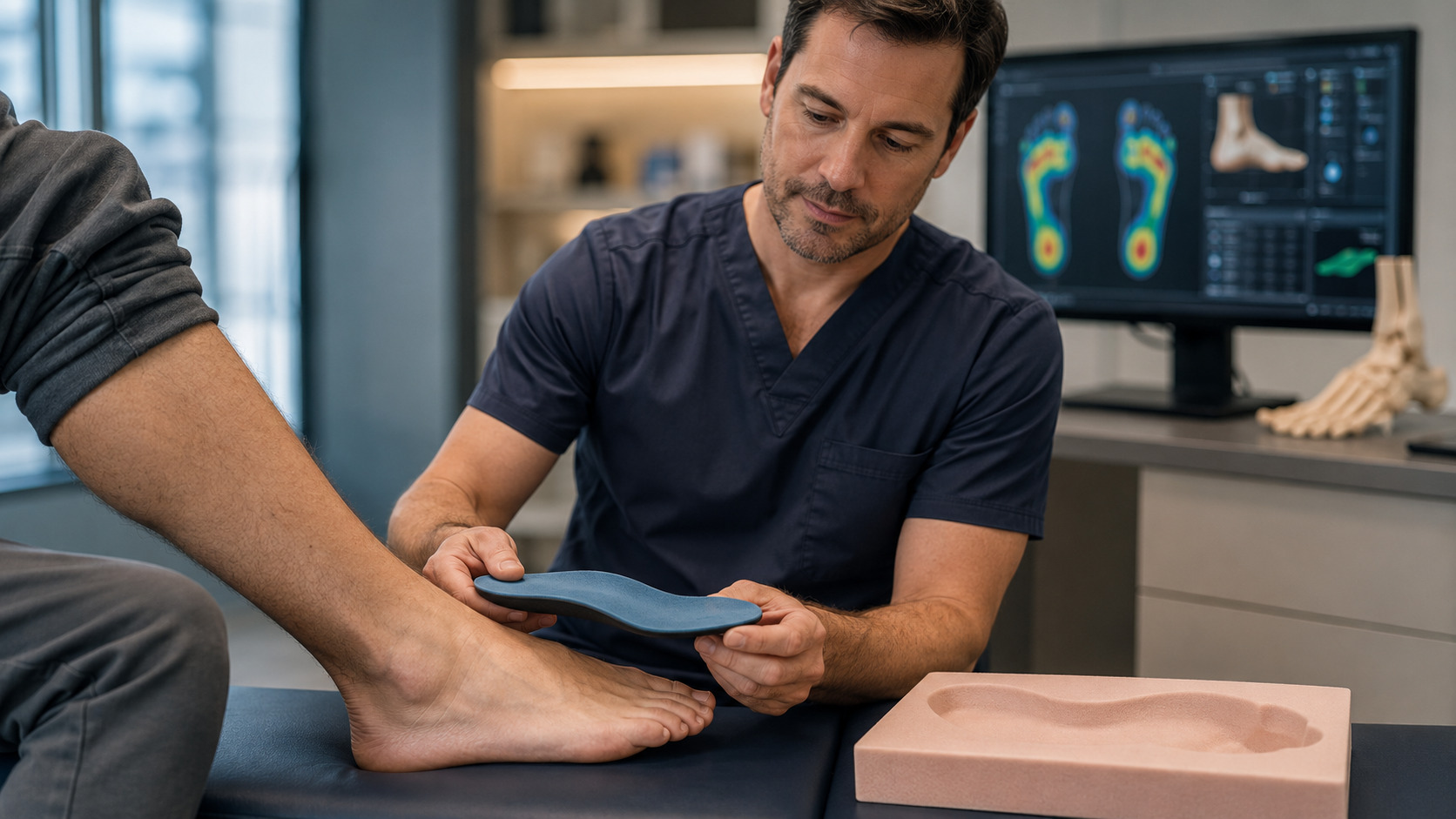
Custom orthotics are the right answer for specific conditions and not a universal starting point.
Severe structural deformity, diabetic foot complications, post-surgical recovery, and failed conservative treatment are the presentations where a custom device is clinically indicated. For milder presentations, the evidence supports starting with less costly interventions first.
When orthotics are genuinely the right answer
MySoleMatch is not anti-orthotic. A custom orthotic is the correct intervention for a specific set of conditions and presentations. Knowing when that is true is as important as knowing when it is not.
Severe structural deformity
Significant flat foot collapse, rigid high arches, or severe overpronation beyond what a stock stability shoe can correct require a custom-molded device. When the structural deviation is significant enough that no off-the-shelf shoe can adequately address the alignment problem, a custom orthotic fills that gap in a way nothing else can.
Diabetic neuropathy
Diabetic neuropathy changes the calculus entirely. When sensation is reduced or absent, pressure redistribution becomes a medical priority, not a comfort preference. Custom orthotics and diabetic shoes work together to manage plantar pressure and protect insensate feet from ulceration. This is a clinical intervention, not a consumer decision. If you have diabetic neuropathy, this conversation should be happening with your podiatrist or endocrinologist - not ending at a shoe store.
Post-surgical recovery
Following foot or ankle surgery, custom orthotics are frequently part of the rehabilitation protocol. The foot's biomechanics change after surgery, sometimes permanently. A custom device accommodates those changes in a way a general supportive shoe cannot.
Leg length discrepancy
A structural leg length difference affects the entire kinetic chain from the foot upward. Only a custom device can be built to the precise specification needed to address this accurately. OTC insoles and supportive shoes cannot compensate for this type of asymmetry.
Failed conservative treatment
If a condition-appropriate supportive shoe and a quality OTC insole have been tried consistently for a reasonable period, typically six to eight weeks and symptoms have not improved, that is the clinical signal to seek a podiatrist evaluation and consider custom orthotics. Conservative treatment failing is not a reason to give up. It is a reason to escalate to the next level of intervention.
If your condition falls into any of these categories, the investment in custom orthotics is justified. Do not let cost avoidance delay a necessary medical intervention. The right podiatrist can evaluate your specific situation and prescribe accordingly.
The middle path most people skip straight past
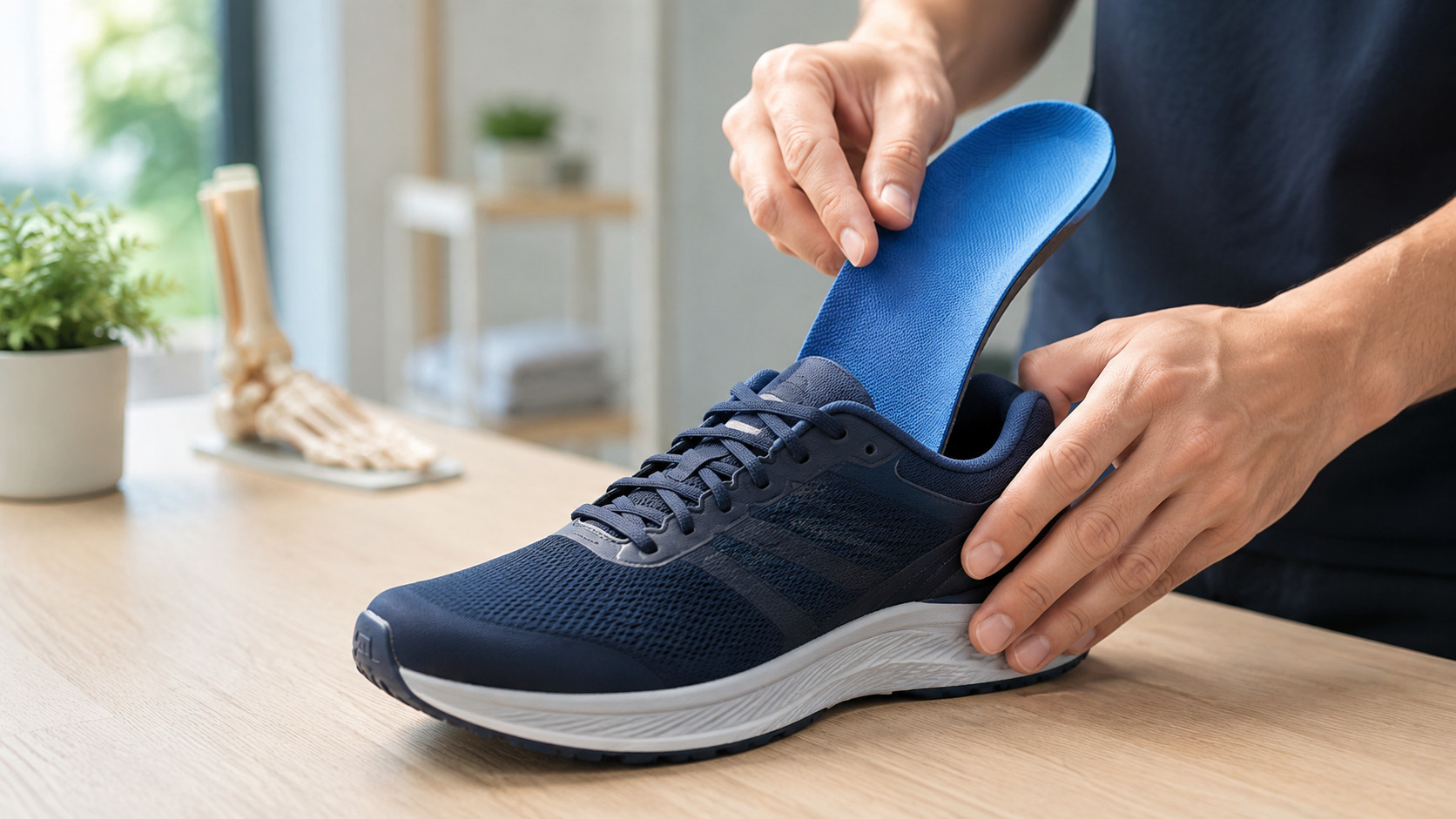
A condition-matched shoe plus a quality OTC insole is a legitimate first-line intervention. Not a compromise.
The evidence supporting prefabricated orthotics as comparable to custom devices for plantar heel pain means this combination deserves a genuine trial before committing to a $500+ custom device. For many people it is enough.
The CADTH evidence review effectively validates a path that most people skip: a condition-appropriate shoe combined with a quality OTC insole as a genuine first-line intervention. If prefabricated orthotics perform comparably to custom devices for plantar heel pain, and a supportive shoe addresses the underlying biomechanical need, then this combination is not a budget compromise. It is an evidence-supported starting point.
In practice this looks like:
A stability shoe for overpronation paired with a Powerstep or Superfeet insole for additional arch reinforcement. A high-drop shoe for plantar fasciitis paired with a heel cup during the acute recovery phase. A wide-toe-box shoe for bunions or metatarsalgia paired with a metatarsal pad to redistribute forefoot pressure.
The cost comparison is worth making explicit. A condition-matched shoe at $130 to $180 combined with a quality OTC insole at $30 to $50 totals $160 to $230. Custom orthotics alone start at $400 and can exceed $600 before the shoe that goes with them. The evidence does not consistently support a $300 to $400 premium outcome for the more expensive option in mild to moderate presentations.
Browse the MySoleMatch accessories guide for OTC insole options organized by condition and use case.
Three questions that tell you where to start
The framework is straightforward once the options are clearly defined. These three questions will tell most people with common foot conditions where to begin.
Question one - How severe is your condition?
Mild to moderate symptoms with no severe structural deformity: start with a condition-appropriate shoe. Severe structural issues, diabetic complications, post-surgical recovery, or leg length discrepancy: see a podiatrist before buying anything. The severity of the condition determines the level of intervention required. Starting at the wrong level in either direction costs time, money, and comfort.
Question two - Have you tried a condition-appropriate shoe yet?
Not a comfortable shoe. Not a popular shoe. Not the shoe with the best reviews on a running website. A shoe specifically matched to your condition's biomechanical requirements. Most people with ongoing foot pain have not done this. They have tried shoes that felt good in the store or came recommended for general comfort. That is a different exercise entirely. If the answer to this question is no, that is the first step - not orthotics.
Question three - If the right shoe alone is not enough, have you tried a quality OTC insole inside it?
The evidence supports this as a legitimate second step before committing to custom orthotics. A Superfeet or Powerstep insole inside a condition-matched shoe is not a placeholder while you save up for the real thing. For many presentations it is the real thing. Try the $40 intervention before the $500 one. If it resolves the symptoms, you have your answer. If it does not, you now have clinical evidence that conservative treatment was insufficient - which is exactly the information a podiatrist needs to justify a custom device.
Where to go from here
If you have not yet found a condition-matched shoe, the MySoleMatch quiz maps your specific condition to the biomechanical requirements that matter: arch support type, heel drop range, stability category, width, and cushioning profile. Then matches those requirements to shoes that have been evaluated against them. Five steps. Condition-specific results. A starting point that is actually matched to your feet rather than to a popularity ranking.
If you are already in the right shoe and want to add an OTC insole, the accessories page covers the options worth considering organized by condition.
And if your symptoms are severe, persistent, or in one of the categories where a custom orthotic is genuinely indicated, the MySoleMatch podiatrist finder can help locate a specialist in your area. A podiatrist can confirm your diagnosis, assess your gait pattern, and prescribe the specific intervention your foot actually needs - custom or otherwise.
The right answer exists. It just requires asking the right questions first.